
BUILT FROM REUSE, ASSEMBLED THROUGH CARE.
HAAU architecture studio / Khristian Ceballos Ugarte / Tomás J. Mena L / Orizzontale
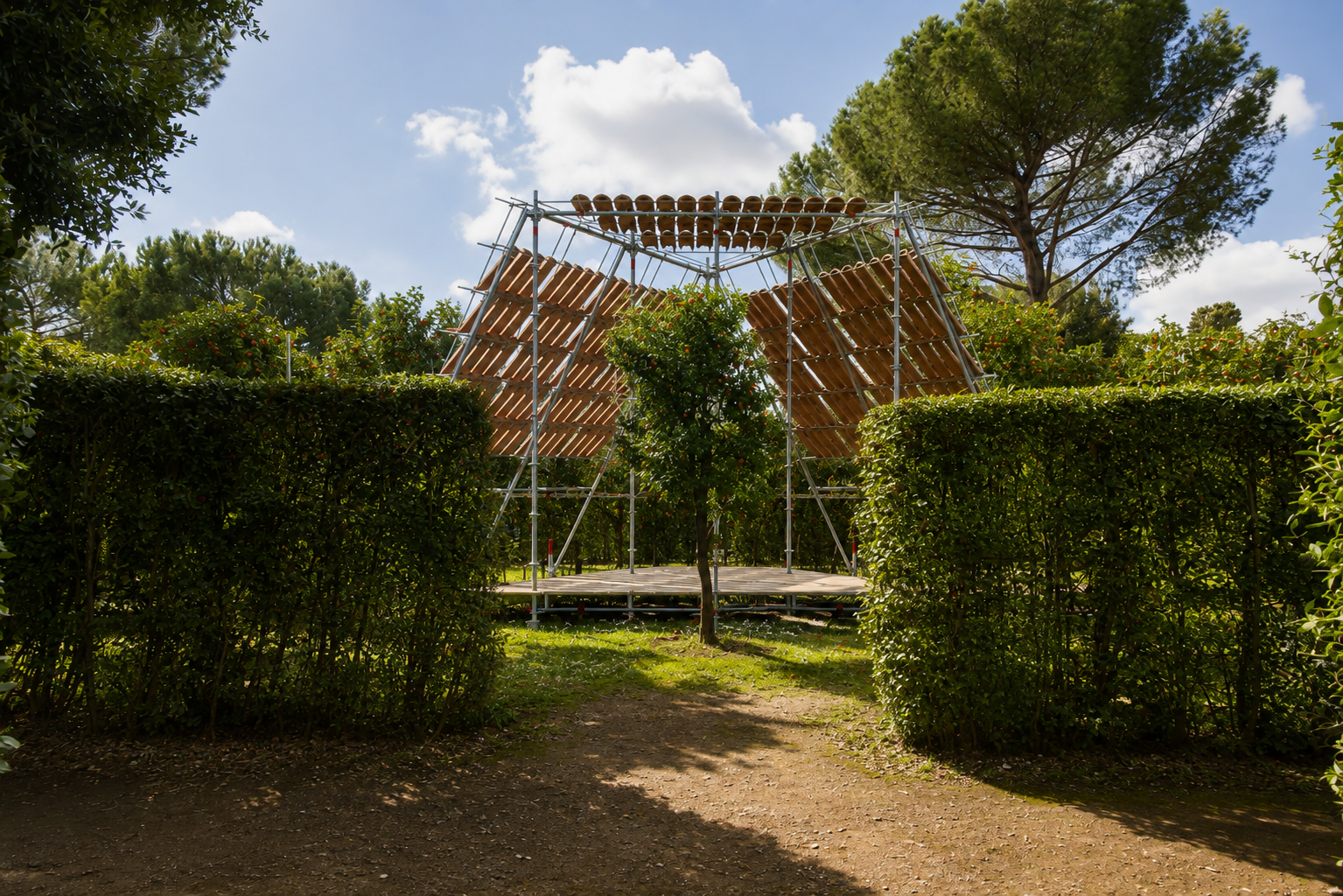
ÉCHAFAUDER is conceived as a temporary architecture whose materials are anything but temporary.
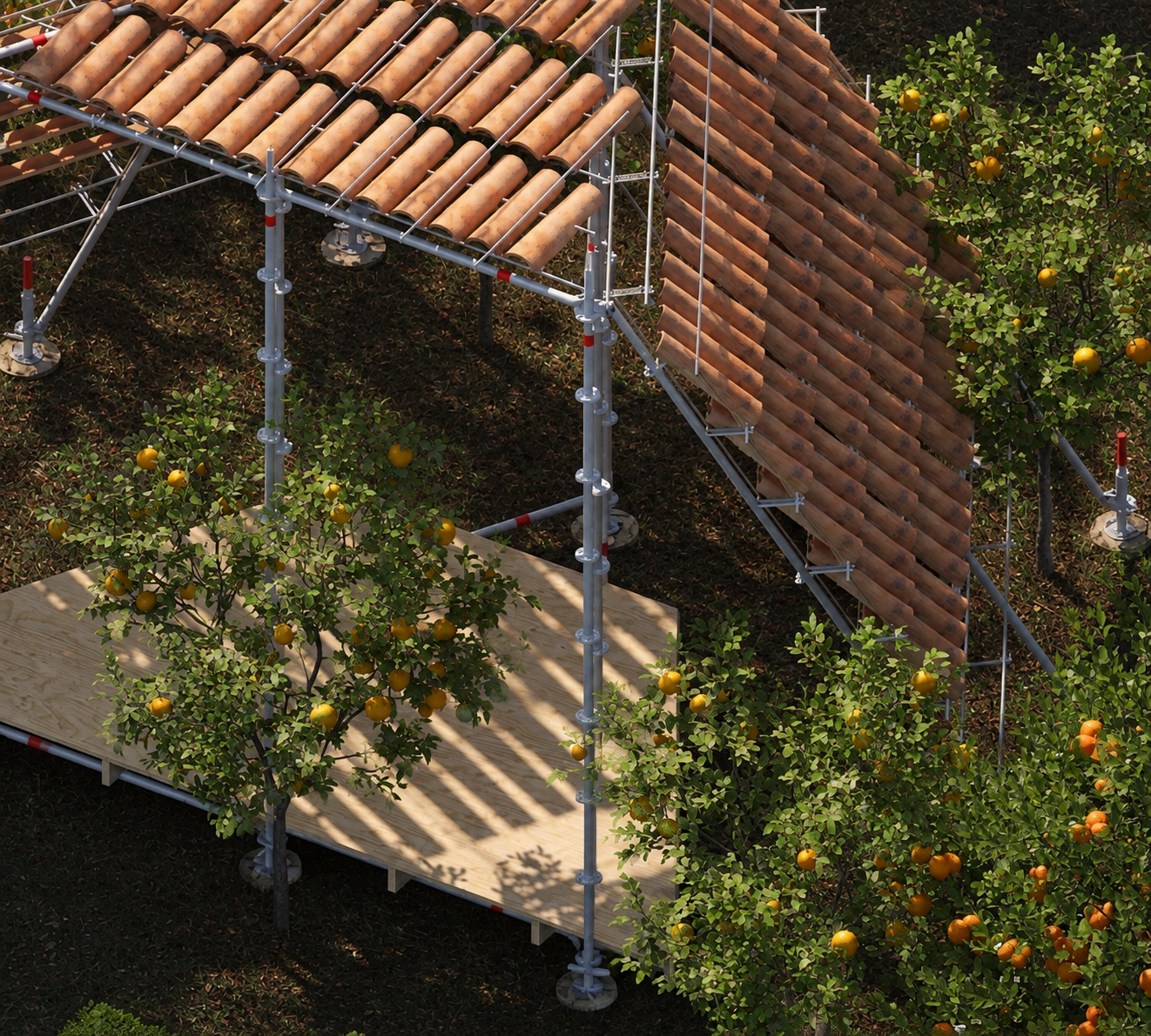
Reclaimed scaffolding, coppi tiles, brick, timber and metal elements are brought together through a modular and reversible construction system.
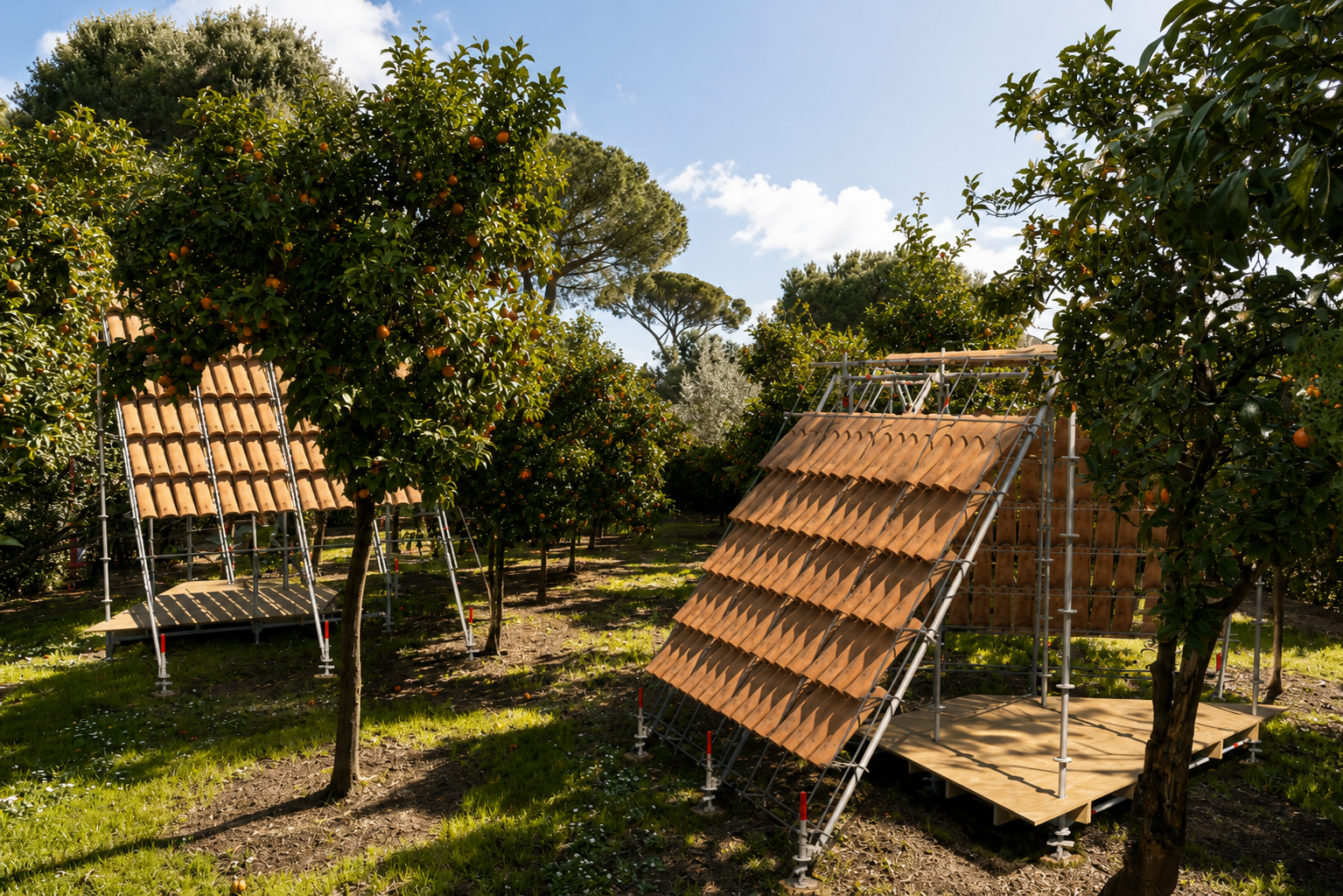
Nothing penetrates the ground. The structure rests lightly within the Carré des Orangers, adapting to the existing trees rather than asking the landscape to adapt to the architecture.
Irregularity becomes part of the design.
Instead of forcing reclaimed materials into standardized details, each connection responds to what is available — allowing traces of previous uses, dimensions and imperfections to become part of the architectural language.
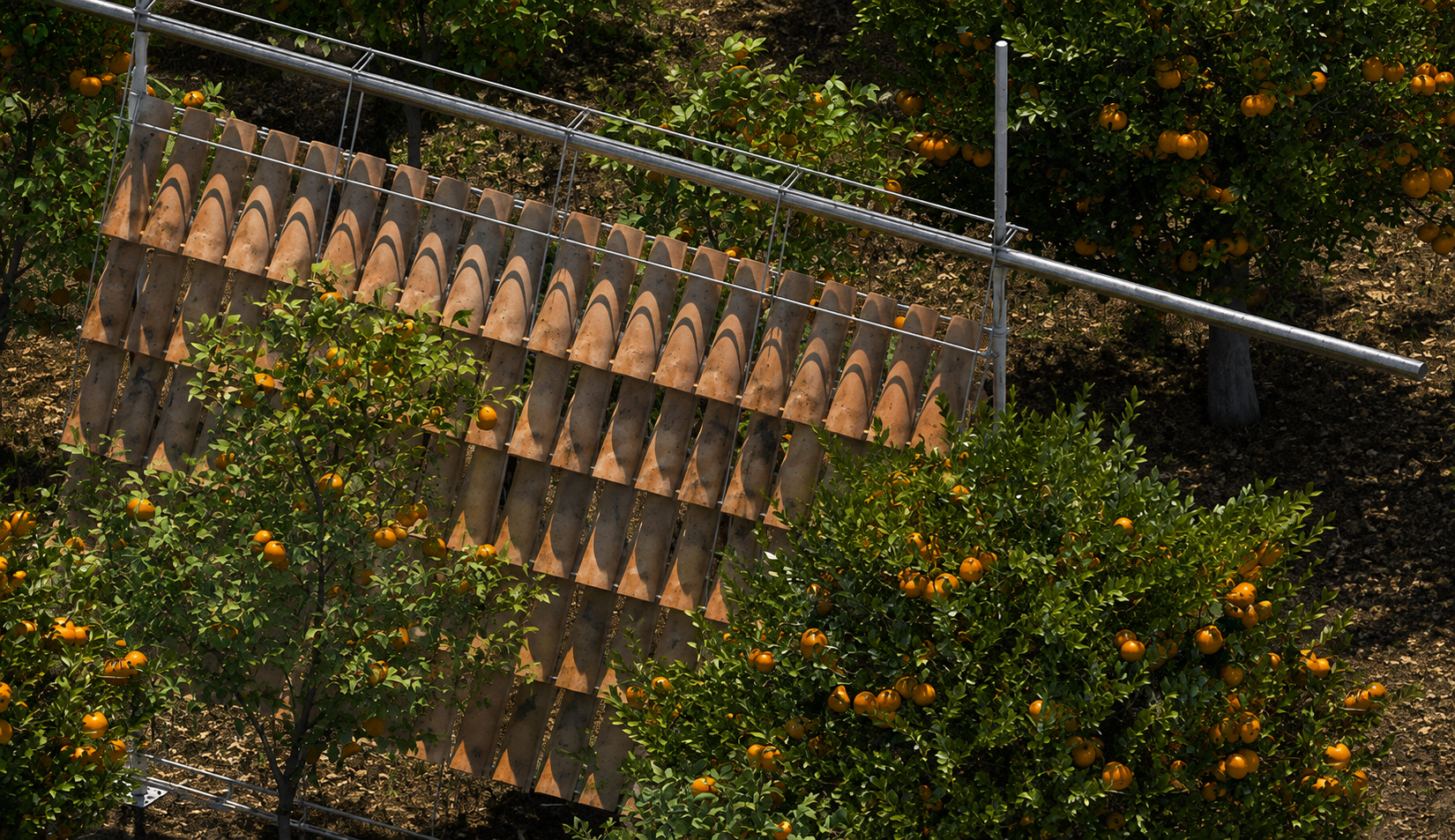
Above, reclaimed coppi tiles are suspended at varying angles across the scaffolding structure. Sunlight passes through the gaps, projecting changing patterns of light and shadow onto the garden below.
And when the pavilion disappears, its architecture does not become waste.
Its components are designed to be dismantled, redistributed and reassembled as new micro-architectures within Rome.
Reuse is therefore not simply a material strategy.
It is a way of understanding architecture as a continuous cycle of use, transformation and care.